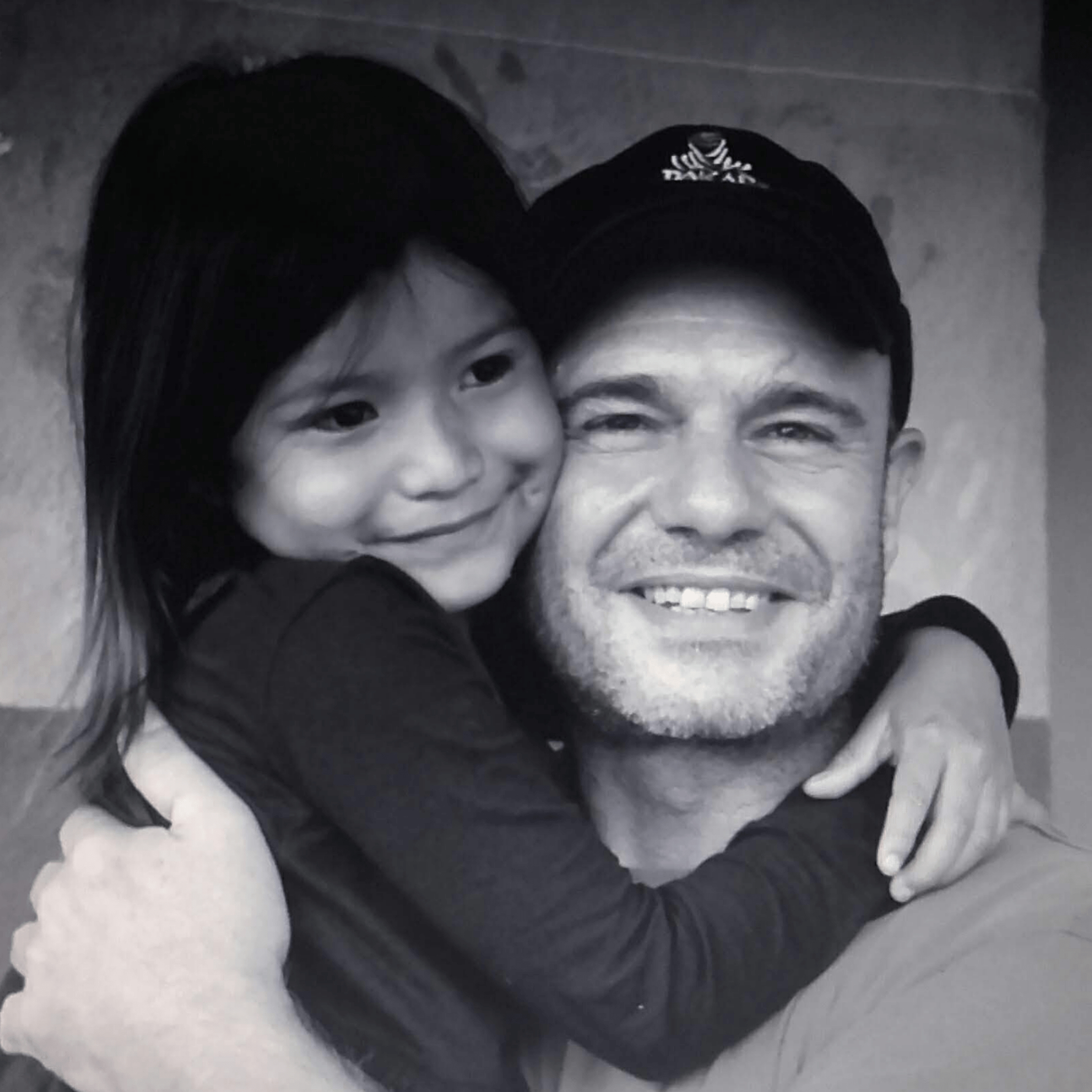
Edgar
During my time with a non-profit organization, I had the privilege to connect with incredible people throughout the world, each sharing stories brimming with humility and inspiration. A recent virtual encounter with Edgar, an Argentinian committed to creating opportunities for others, truly left a positive mark on me. Our paths first crossed some months ago during a Zoom call, where Edgar passionately shared the various projects, he’s involved in. Intrigued, I set out to explore the personal story that shapes his unwavering commitment. In this article, I’m sharing Edgar’s unique journey, highlighting how he turned limited opportunities into a source of fulfillment for both him and those around him.
Edgar: I am a native of the interior of Córdoba of my beloved Republic of Argentina. Born into a hardworking and honest family with limited resources, I grew up in a simple and humble neighborhood. A neighborhood that is now labeled as ‘red zone’ grappling with social emergency.
From a young age, I asked myself one question: Why did so many hardworking and honest families, mine included, struggle to meet their basic needs? I spent hours atop the roof of my family’s house, observing the neighborhood’s stark contrasts. On one side, families like mine went days without the basics, while on the other, wealth was displayed lavishly. In the following years, I met these seemingly affluent families and was surprised to find they shared the same virtues as my parents-hardworking and honest.
It became clear that the only distinction between families submerged in poverty and those flaunting wealth was access to equal opportunities. The realization inspired my commitment to addressing the global issue of unequal chances, affecting millions of families who not only lack awareness of these rights but suffer the devastating consequences of being excluded from them.
Stunned by Edgar’s observations, I delved into research to unravel Argentina’s paradoxical narrative. Despite the nation’s apparent prosperity, a disconcerting reality surfaces. Approximately half of Argentina’s population still lives in poverty. From an early age, Edgar discerned that the sole factor distinguishing underprivileged families in his homeland from those with ample resources was the availability of equal opportunities. The plight of Argentina’s indigenous communities serves as a poignant illustration. Since the government does not recognize them as part of Argentina’s society, they are being deprived of basic, yet essential services. Troubled by this injustice, Edgar resolved to take matters into his own hands.
Edgar: Since my pre-adolescence, I didn’t wait for anyone to come knocking on my door, offering me these longed-for equal opportunities. I went out into the world to search for them myself. In the process, I discovered the love of people, offering to lend a hand, to help without expecting anything in return. People that were willing to help others, simply because they have the tools to help them. Since then, I have learned to listen and to use my empathy to understand what others need to be free. My work now includes providing food, clothing, educational workshops, and sports opportunities. Anything that communities being deprived from government services really need. But my most recent project is the construction of schools and houses from recycled materials. I am talking about killing two big birds with one stone as the old saying goes. The whole world struggles with two big problems, 1) what to do with the millions of tons of garbage we generate daily, and 2) the lack of decent housing for billions of families. It is here where a new project is born that embraces all the previous ones and gives hope to those to come “Eco House TATS’I”.
I found his construction method to be quite fascinating and distinctive, prompting me to ask for a more in-depth explanation.
Edgar: It consists of recycling through different industrial processes. Garbage is converted into raw material, optimal to be used as construction material for houses, schools, hospitals, apartments, cabins, etc. The garbage we are talking about takes between 400 and 1000 years to degrade naturally in the different open-air landfills or burial sites. Other aspects of the project consist of transforming a large part of the garbage into plastic wood, suitable for making any type of furniture and replacing vegetable wood, thus avoiding deforestation worldwide, giving value to the environment, while facing several scourges that destroy our planet and its population. The different pieces made with recycled garbage will last no less than 200 years and can be milled and recycled again up to seven times.
Intrigued by the indigenous communities Edgar mentioned, I discovered that around 2.4% of the country’s population identifies as indigenous or as first-generation descendants of indigenous individuals. Although this percentage might seem modest, it translates to nearly one million people. This implies that without government recognition, approximately one million individuals in Argentina could be deprived of essential rights that should be afforded by the authorities.
Edgar: The current inhabitants are descendants of the children who managed to escape through rivers and forests, from the last massacre carried out by the Spanish and Portuguese. Carried out in an area known today as “Saltos de Moconá” (Misiones – Argentina). The few children who managed to survive were thanks to their fathers and mothers, who put their own bodies as a shield, facing the various attacks of the invaders, with their firearms, swords, and daggers. These parents gave their lives with the intention of saving time so that their children would have the opportunity to run, escape and survive. Another reason why this project is so special is that the Mbya communities, who live in the forest, are totally isolated from the rest of the communities in the province and are also more than 100 km away from the nearest town inhabited by missionary citizens who do not belong to any indigenous ethnic group, but rather are descendants of foreigners and Creole gauchos. They live without access to any basic services, without drinking water, electricity, Internet, gas, heating, etc.
Edgar addressed the challenges of governmental non-recognition of numerous native communities through his innovative approach to constructing buildings using recycled materials.
Edgar: Even though we always work together with communities to address their individual needs, we certainly want to prioritize building schools. Because that’s where we found a gap between the government’s ignorance and its desired nonaction. By building schools in these communities, the native people automatically go from being invisible to being made visible. You know, once a school is built, the government has to recognize the school, and therefore also the people attending the school, and must take responsibility. Because once the infrastructure stands, the government is obliged to send teachers, document the inhabitants, provide medical assistance, and provide support plans. The development of the different projects is neither more nor less than a bridge, so that they can reach the different rights of equal opportunities.
Edgar shared that over the years of his work, he has constantly gone to great lengths to facilitate others in gaining access to opportunities. Demonstrating his commitment, he has experienced days without basic resources like food. Fascinated by his dedication, I wanted to find out what he believes this project reveals about his character.
Edgar: I find inspiration in the fundamental aspects of my life that form the foundation of various projects- a profound love for others, perseverance, tenacity, and an ongoing effort to alleviate the hardships faced by those in need. This journey is not without hurdles, navigating through bureaucratic obstacles, time constraints, and expenses, all inherent in the pursuit of helping others.
It’s crucial to acknowledge that the realization of these projects wouldn’t be possible without the invaluable support of numerous individuals. However, it’s equally important to recognize the need for a pioneering spirit, someone willing to dedicate oneself for the greater good.
In essence, the project reflects the collaborative efforts, talents, and abilities of many individuals coming together for the shared goal of helping those in need.

 discoveredvoices.blog
wow!! 40Sustainable dreams: An eco-friendly revolution for Argentina’s forgotten communities
LikeLike