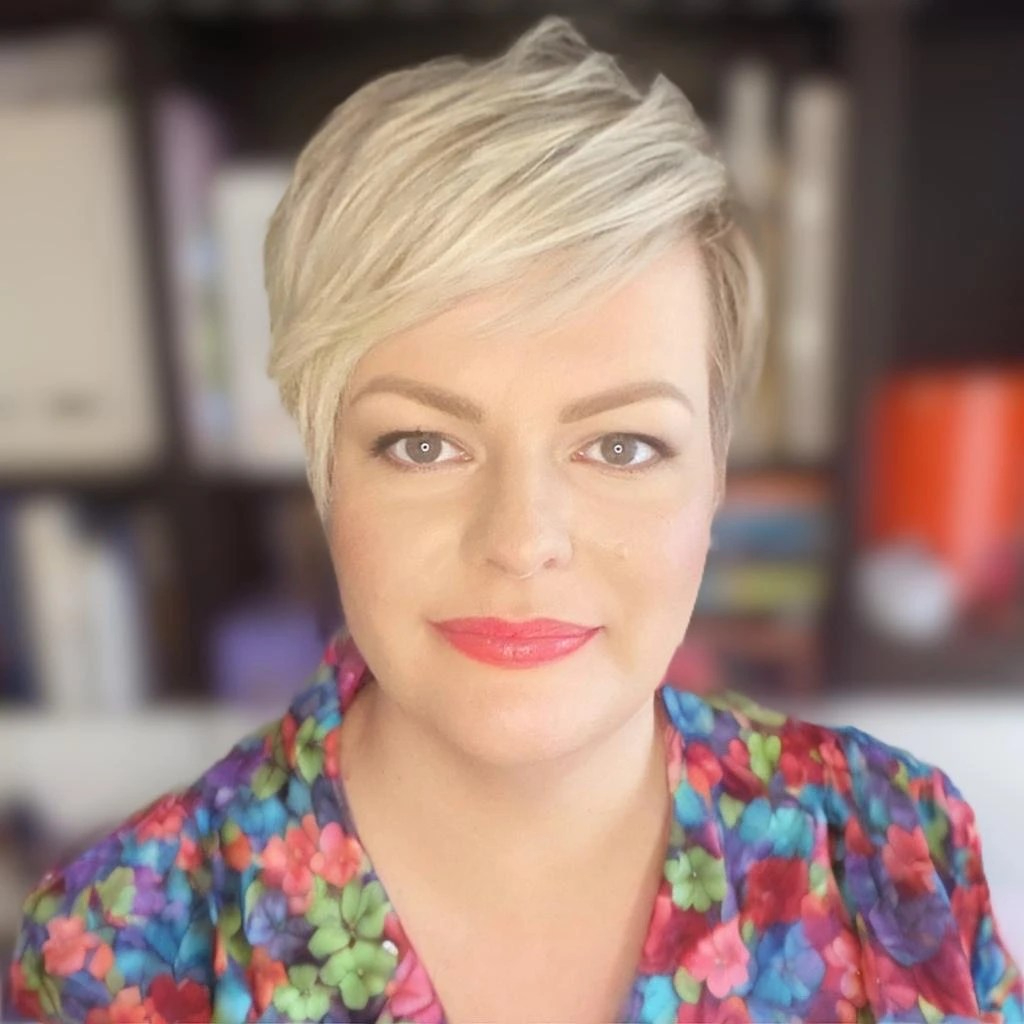
Danielle
In the late summer of last year, I lost my grandpa. Something incogitable for a man who always made life seem limitless. My grandpa was fearlessly adventurous with a true lust for life. Volop genieten, as the Dutch saying goes, was his big motto. Enjoying life to the fullest. In a way, I consider myself as fortunate that this was the first funeral I would attend. But sincerely speaking, this also left me completely unprepared.

One gloomy afternoon a few days after his passing, Danielle rang the doorbell of my grandparents’ old apartment. A modern two-bedroom apartment that still carried the feel of his presence. As my family welcomed her in, she radiated a sense of calmness and respect. Something much needed during a time of emotional turmoil.
Danielle would be the speaker at my grandpa’s funeral.
To be completely honest, I didn’t put much thought into Danielle’s profession at that time. My mind was busy with quite some other things as you can imagine. But now that some months have passed, I started thinking back to Danielle and the heartfelt speech she gave at my grandpa’s funeral. Nostalgic, with a touch of Dutch humor. A speech that would make this goodbye just a little bit more bearable.
Only knowing Danielle as the speaker at my grandpa’s funeral made me curious about her side of the story. I couldn’t help but wonder how a person who didn’t even know my grandpa personally was able to give such a memorable speech about him? And what must it feel like to work in a profession where one is constantly surrounded by grieving people?
I remembered that Danielle had left me her business card, so I decided to contact her again.
At first, I wondered if she would even remember me, given that quite some time had passed since we last talked. Astonishingly, she immediately recalled and agreed to reconnect. A few weeks later, we were able to schedule a phone call.
During our conversation, her unique approach to this profession utterly fascinated me. A profession that I didn’t even know existed until last summer.
For that reason, being rather unfamiliar with that type of profession, I first asked Danielle if she could explain more to me about her profession and how she got into it.
For the past eight years, I have been running my own business as a ceremonial speaker. That’s basically the job title. While I mostly speak at funerals, weddings can also be part of it from time to time- something that can be quite a nice change of pace. While doing this job on a freelance basis has its benefits, it can also be quite challenging. I wouldn’t even call it a job necessarily, it’s more like a lifestyle. For example, when someone calls me to speak at a funeral, it’s very difficult to say no. Even if you are overworked or tired, you know that there is a grieving person on the other line who hopes for your help. But before I started working as a ceremonial speaker, I was a funeral organizer. I assume that people might believe that those jobs are quite similar, but they are actually completely different. As a funeral organizer, I was in charge of the when, where, and what’s of a funeral. A rather practical job. As a ceremonial speaker, on the other hand, I am much closer to the families and get to help them in a deeper and more personal way. Being a people person, this job as a ceremonial speaker seemed like a more fulfilling choice for me.
When Danielle spelled out why she decided to switch her job eight years ago, I became curious about what her favorite part of the job is now.
There are many things that make me love my job. But the one thing that is definitely my favorite is the fact that I get to meet all different kinds of people with different cultures and backgrounds. Everyone brings a different story to the table. And, a fun side note, my job involves visiting people’s homes, so it’s also very interesting to see all these different people’s lifestyles.
Yet, given the nature of this job and being around people at their most vulnerable times, I assumed that she definitely might face some challenges as well.
There are two things that are definitely challenging. The first thing is saying no. As a freelance worker, it is very difficult for me to set boundaries between my personal and professional life. When I get a call, I know that there is a family who is sad, and I want to help them, which makes it very difficult to say no. But I also learned to listen to the signs of my body. If I get too tired and overworked, I take a few days off to reset. If I don’t do this, my head gets all foggy, and I won’t be able to give the speech the family deserves. I think it’s more important to take a small break and be fully in the moment when giving a speech than be foggy while maybe helping one or two families more. The second thing is that this is more of a 24/7 job than a 9 to 5 job. Don’t get me wrong. I purposefully choose to give the families my contact details because I understand the difficult state they are in and want to be able to be reached when they have an urgent question. But this also means that I constantly feel like I’m on the move and have to be ready, which makes it difficult to shut off for a little bit or relax.
After explaining this, Danielle added that there is one more challenge to the job. Namely when it comes to a funeral of a younger person.
It would be amazing if all funerals would be for people who lived a long fulfilling life. Sadly, there are more young people dying than you might assume. Since I started working eight years ago, I kept track of the people’s average age. You won’t believe it, but the average age of people at whose funeral I spoke is a shocking 59 years. You have to keep in mind that this is an average, which means that half of the funerals I spoke at were of people who were 59 years or younger. As you can imagine, this is an unbelievably difficult situation. It’s always hurtful to see people at their most vulnerable, but it’s especially so when you see parents grieving over a lost child. When this is the case, I always need some extra distractions, like going on nice long evening walks with my dog at the end of the day.
Danielle mentioned that this also makes her job quite fluid as there is no one-size-fits-all speech that suits each funeral. While there are some elements that are part of her style, like adding a tiny bit of humor to it, each speech is planned in its unique way. This is when I wanted to know how what Danielle’s secret is to getting to know a person who is not there anymore. How could she write a speech about someone she never met?
To be completely honest, there is one very specific answer to this. It’s not so much about what people say about that person than the way they talk about the person. Of course, it’s important to hear the stories as well, but I learn most about a person by watching how others talk about them. Mimics and the tone of their voice that’s how I understand each family member’s personal connection to this person. For example, when you talk about your grandpa and your eyes light up, then I immediately know how you feel for him. On the other hand, if I would see that someone’s mimics don’t match the words, then I know that I need to dig a little bit deeper.
While Danielle was answering my question, I came to realize that I asked about speaking at a funeral of an unknown person. But I was wondering if she ever speaks at the funerals of people she did know.
Yes, this has been the case in the past. But to be honest, this is very difficult, and I try to avoid this for close friends and relatives in the future. Because when a friend or close family member passes away, I myself am also in a grieving phase and need to find my own best way to digest this information. Then it’s difficult to pull myself together to give a speech. However, sometimes it was the person’s wish for me to organize and speak at the funeral, which makes it difficult for me to say no. The way I try to best approach this is by telling myself that I am also only human, and if I would shed a tear, that would have to be okay. On this note, being a human also counts for the funerals of people that I didn’t know.
At the end of our conversation, I wanted to know one last thing. Once she got to know a family, learned about their stories, and spoke at the funeral, how is she able to say goodbye now that her job is over?
In Dutch, a funeral is oftentimes also called the “afscheid” (goodbye/parting). This is exactly what it feels like for me as well. After the ceremony, I always make sure to go to the family directly to give them my best wishes and say my goodbyes. And that’s also where my part of the job is completed, and I need to give the family room to digest their loss. But, of course, it’s a bittersweet feeling.
Throughout our conversation, I started to realize how special Danielle’s profession really is. Being a ceremonial speaker at funerals and weddings gives her a truly fascinating and unique tool: She has the power to make people’s most vulnerable and sad times just a little bit more tolerable, while making people’s happiest moments quite merrier.
But our conversation didn’t end there. I had one last question to ask Danielle. I wanted to know if she has a secret on how to cope with living this lifestyle of constant emotional rollercoasters.
This might sound a little bit silly, but I live pretty close to de Efteling [a famous attraction park in the Netherlands]. So, on days that I feel sad and overwhelmed, I just go to de Efteling for two or three hours. Not necessarily to ride all the rollercoasters *laugh*, but to go on a stroll and look at all the happy kids running around, enjoying their lives.
When she told me this, I suddenly started feeling very close to my grandpa again. When I was younger, my family would always go to de Efteling when visiting our grandpa.

 discoveredvoices.blog